Wakimena Script Handwritten Font for Digital Branding
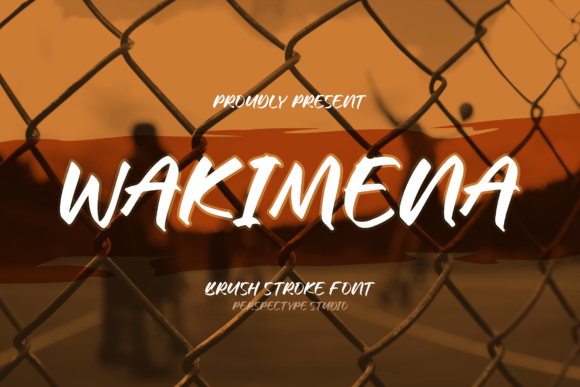
As a UI designer who ships landing pages, SaaS dashboards, and e-commerce experiences daily, I reach for Wakimena when I need a Script Handwritten font that feels human—not gimmicky—and performs across digital touchpoints. Wakimena isn’t just decorative; it’s a deliberate typographic choice for designers who understand that tone lives in letterforms. Its brush-stroke texture carries warmth and intentionality—ideal for brands prioritizing authenticity without sacrificing polish.
Wakimena for Logo Design and Website Headers
Wakimena shines brightest as a Fonts solution for logo text and primary headers on websites—especially for creative studios, boutique online stores, and wellness or lifestyle brands. Because its strokes vary naturally in weight and flow, it creates immediate visual hierarchy: your site name stands out before the user reads a word. On responsive layouts, I use Wakimena at 48–64px for desktop hero sections and scale down to 36px on mobile—always pairing it with a neutral sans serif (like Inter or Manrope) for body copy. That contrast keeps scanning effortless while preserving brand voice. For SVG-based logos, Wakimena exports cleanly, avoiding rasterization issues common with complex script fonts.
Wakimena for Product Packaging and Online Store Banners
When designing banners for Shopify or WooCommerce product pages—or even dynamic email headers—I use Wakimena to label hero products like mugs, homeware designs, or t-shirts. Its brush-stroke character signals craftsmanship and care—traits customers associate with premium physical goods. Unlike overly ornate scripts, Wakimena avoids thin hairlines that vanish on retina screens or blur on dark backgrounds. I apply subtle letter-spacing (+20–40) and set it over high-contrast image overlays (e.g., muted linen textures or soft-focus product shots). This ensures legibility without sacrificing elegance—critical for conversion-focused layouts where clarity drives clicks.
Wakimena for Branded Name Cards and Digital Business Assets
For digital business cards, portfolio site “About” sections, or branded PDFs (think pitch decks or course syllabi), Wakimena – Brush Stroke Font is suitable for any projects such as logos, branding projects, homeware designs, product packaging, mugs, quotes, posters, shopping bags, t-shirts, book covers, name cards. Its natural rhythm makes short phrases—like “Est. 2021” or “Handcrafted in Portland”—feel grounded and personal. I avoid using it below 20px or for full paragraphs. Instead, I reserve it for names, taglines, and micro-copy accents. In Figma or Webflow, I export Wakimena as WOFF2 for fast loading and confirm it includes OpenType alternates for stylistic variation—essential when building reusable design systems.
Wakimena for Quotes and Social Media Graphics
Wakimena transforms static quote graphics into scroll-stopping moments—especially on Instagram carousels, Pinterest pins, or blog header images. As a Script Handwritten typeface, it adds emotional resonance to short, impactful lines (“Slow down. Breathe. Begin.”) without competing with imagery. I layer it over soft gradients or desaturated photos at 70% opacity, then adjust tracking to prevent crowding. On mobile-first feeds, I test readability at 28–32px: Wakimena holds up because its downstrokes are generous and its x-height generous enough for quick comprehension—even at smaller sizes. Pair it with a clean mono-spaced sans for attribution (e.g., “— Maya Angelou”) to reinforce hierarchy.
Wakimena for Book Covers and Editorial Landing Pages
If you’re launching a digital course, self-published ebook, or newsletter brand, Wakimena delivers editorial sophistication without pretension. Its organic energy works beautifully on book covers and course sales pages—particularly for memoirs, creative journals, or mindful living guides. I use it for titles only, never subtitles or body text. For web versions, I embed Wakimena via @font-face with fallbacks and verify it supports Latin-1 characters (which it does). Bonus: its natural irregularity helps differentiate headlines from AI-generated content—a subtle but growing trust signal for readers.
Wakimena for Shopping Bags and T-Shirt Typography
Designing digital mockups for merch? Wakimena – Brush Stroke Font is suitable for any projects such as logos, branding projects, homeware designs, product packaging, mugs, quotes, posters, shopping bags, t-shirts, book covers, name cards. Its tactile quality translates directly to fabric and paper—it looks hand-printed, not screen-rendered. For t-shirt front graphics, I keep phrases under five words (“Made With Love”, “Wild & Rooted”) and avoid tight kerning. On shopping bag mockups, I place Wakimena along the top fold or center chest area, ensuring stroke width remains legible at 120mm print width. In CSS, I replicate this by testing line-height ratios of 1.1–1.25 to preserve spacing integrity.
Wakimena Font Pairing Strategies for Web Design
Wakimena thrives in contrast. As a Fonts asset, it pairs best with highly legible sans serifs (Inter, Poppins, or DM Sans) for UI labels, buttons, and navigation. For editorial or luxury contexts, try it with a low-contrast serif like Literata or Cormorant Garamond—but only for headings. Never pair two scripts. I also recommend checking if Wakimena includes true italics (it does) and alternate glyphs (it offers discretionary ligatures and swashes)—these let you fine-tune tone per section. For accessibility, always use Wakimena for non-essential text: never for form fields, error messages, or navigation links.
Commercial Licensing for Wakimena in Client Projects
Every web designer knows licensing matters. Wakimena is a commercial font—meaning you can legally use it in client websites, SaaS dashboards, online store banners, digital templates, and brand identity kits—as long as you purchase a standard desktop + web license. That covers self-hosted WOFF2 files, embedded PDFs, and static image exports. Just avoid reselling Wakimena as part of a font bundle or offering it for download on your site. When delivering assets to clients, include the license summary so they understand usage rights—especially important for agencies managing ongoing brand maintenance.